
Mounting systems for PV solar
power plants manufacturer
eusales@kraft.solergy.company
+35924371691
+35924371691
Mounting systems for PV solar
power plants manufacturer
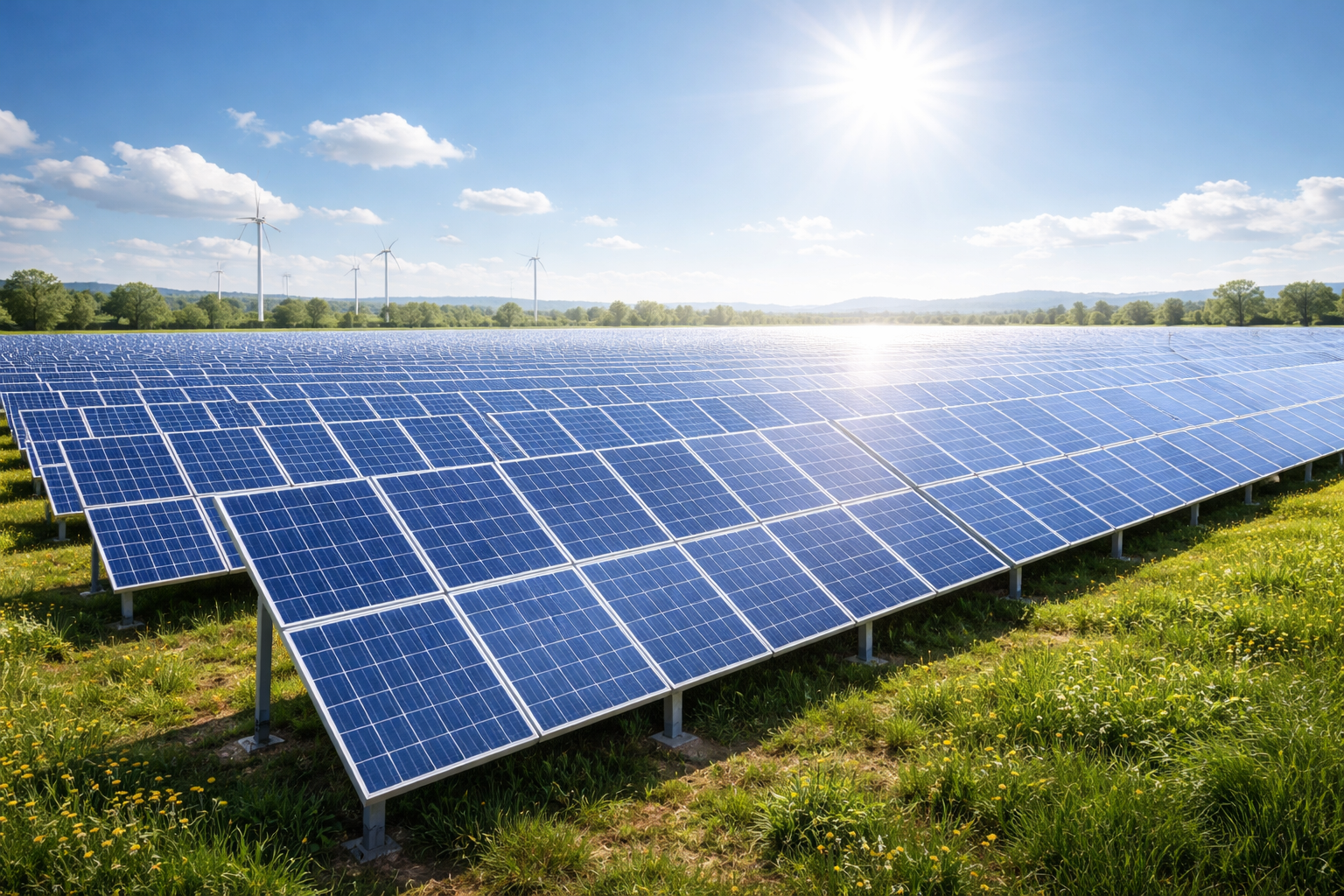
Big news for EV drivers and clean energy fans! Tesla has opened its largest Supercharger hub in Lost Hills, California, featuring 164 high-power charging stations that are primarily powered by an 11 MW solar array and 39 MWh of battery storage. The new hub is mostly off-grid, with only a minor utility connection for future expansion, enabling rapid deployment—within eight months—to address urgent EV infrastructure needs along a key travel corridor. The facility includes amenities like drive-through charging stalls for vehicles with trailers, further enhancing its accessibility.
This project demonstrates a significant trend toward integrating large-scale solar generation and energy storage with electric vehicle (EV) infrastructure, signifying a new business model for solar companies and charge point operators. By bypassing slow or constrained utility grid connections through solar-plus-storage solutions, solar developers can seize new opportunities in high-demand locations where traditional grid access is a bottleneck—offering market agility and speed-to-market advantages. This could create expanded demand for industrial-scale solar arrays, storage products, and deployment services, as well as new collaborations between solar manufacturers, storage providers, and EV infrastructure firms. Further, such projects underscore the viability and dependability of renewable-powered transit networks, strengthening the case for investment in distributed solar and storage for mission-critical and commercial use. The success of Tesla’s hub also sets a competitive benchmark, potentially motivating other companies to innovate or adopt similar off-grid or hybrid solar models. However, this approach may require substantial upfront investment and navigation of different permitting or regulatory frameworks, posing challenges for smaller firms.
The article highlights how integrating solar and storage with EV charging infrastructure unlocks new business models, accelerates project delivery, and expands market opportunities for the solar industry, particularly in transport corridors underserved by the grid. This development positions solar energy as a critical enabler of clean mobility and rapid infrastructure scaling.
Kraft Solergy Company
US BRANCH:EUROPEAN SALES:
